Versailles Diplomacy: How Macron May Have Stopped Trump from Handing Ukraine to Putin
by Stihn B. Kinna for Round World Society
When Donald Trump reportedly told French President Emmanuel Macron that he was “pissed off” at Vladimir Putin’s demand to remove Volodymyr Zelensky from power, it marked a rare moment of clarity in a long and confusing dynamic. For years, Trump has either enabled or excused Putin’s actions—deflecting questions, echoing Kremlin narratives, or outright undermining Ukraine. But now, at least rhetorically, there’s a shift. And if that shift holds, it may be because Macron—through quiet but formidable diplomacy—has finally forced Trump to confront the consequences of his alignment with authoritarianism.
This isn’t just about Putin’s latest provocation. It’s about the way diplomacy works when history, culture, and global memory are wielded with precision.
A Jarring Demand, and a Rare Reaction
Putin’s suggestion that Ukraine must remove its elected president and replace him with a transitional UN-backed administration isn’t just offensive—it’s chilling. It strips away any illusion that Russia’s war is about “denazification” or security. It’s about erasure. About rewriting history with bullets and bureaucracy.
That Trump reacted at all is significant. That he directed his frustration toward Macron—not the press, not his social media base—suggests something deeper. It wasn’t just a soundbite. It was a conversation with one of the only world leaders Trump may actually respect. That matters.
Because Trump, for all his bluster, recognizes when power is real—and when history might remember him not as the dealmaker, but as the villain.
Macron: The Counterweight Trump Can’t Dismiss
Emmanuel Macron has quietly become one of the most effective politicians on the world stage—not just a leader, but a force. From his bold critique of NATO as “brain dead” to his recent confrontations at the UN, Macron understands that diplomacy is more than meetings and press releases. It’s strategy, tone, timing. It’s knowing when to shame, when to flatter, and when to draw a hard line.
Unlike Trump, Macron doesn’t traffic in chaos. He deals in structure, precision, and persuasion. That makes him, in many ways, the ideal foil. While Trump courts spectacle, Macron wields symbolism. And when those two forces meet, the results can be unpredictable—but also transformative.
If anyone could make Trump stop and think—even for a moment—it’s Macron.
The Cultural Gravity of France
It may sound superficial to say that France’s historical weight plays into this—but with Trump, optics are everything. And Paris knows how to project power.
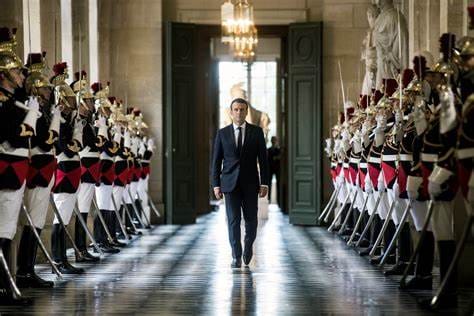
The legacy of Versailles, the enduring global resonance of French art, architecture, literature, diplomacy—it all signals permanence. Prestige. The kind of stature Trump covets. He may not be moved by the ideals that built Versailles, but he knows what it means when a nation still carries that kind of weight.
The Paris Olympics reminded the world that France is not just a cultural capital—it is a civilizational pillar. And Macron, who knows exactly how to blend past and present, uses that heritage not as ornament, but as influence.
Trump may not understand why Versailles matters—but he knows it does.
Europe’s New Leadership—and the Warning Trump Might Finally Hear
Macron isn’t working alone. The UK, despite its post-Brexit identity crisis, has stepped up diplomatically and militarily, showing real resolve against Russian aggression. Together, France and the UK have emerged as a new axis of moral clarity—especially as Germany hesitates, trapped between economic ties and political reticence.
It’s entirely possible that Macron, in private, warned Trump in no uncertain terms: support Putin’s demands, and you won’t just be remembered—you’ll be blamed. The black eye America would carry on the world stage could last for generations. This isn’t just about elections or oil. It’s about legacy. About shame.
And shame, when strategically applied, can be more powerful than sanctions.
A Moment of Realignment—Or Just a Pause?
We don’t yet know whether Trump’s shift will last. He could reverse course tomorrow. But the fact that he blinked—even briefly—suggests that something broke through. Maybe it was the fear of isolation. Maybe it was the optics. Or maybe it was the quiet but unmistakable force of Macron himself, reminding Trump of what the world is watching, and what it will remember.
In this moment, Macron represents more than France. He represents the kind of leadership we need: calm, focused, rooted in principle but unafraid to play the long game.
And if that long game leads Trump to finally draw a line against Putin—no matter how late—then we may owe it, at least in part, to the enduring power of Versailles diplomacy.