
The Intentional Ambush at the White House:
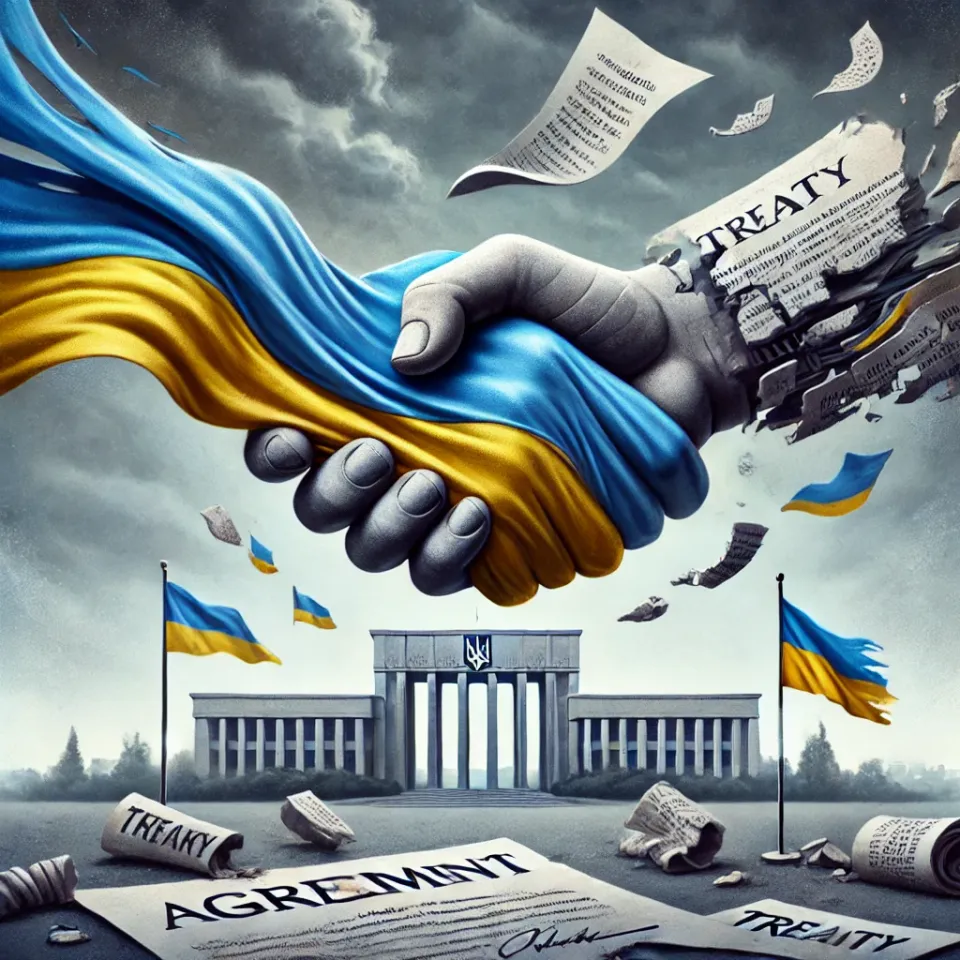
Trump, Vance, and the Scripted Humiliation of Zelensky
It was supposed to be a diplomatic meeting. A reaffirmation of alliance. A handshake between the embattled leader of Ukraine and the President of the United States, a country that, for the better part of a century, had prided itself on standing against tyranny and defending the sovereignty of its allies.
Instead, it was a spectacle—a staged, meticulously engineered ambush designed not for diplomacy, but for television.
As Volodymyr Zelensky sat in the Oval Office, flanked by Trump and Vice President J.D. Vance, the tension was already thick. Something was wrong. And by the end of the meeting, the world had its answer: The United States, under Trump, had officially turned away from Ukraine—and toward Vladimir Putin.
And how do we know this wasn’t just an unfortunate, heated exchange? Because Trump told us so.
“I think we’ve seen about enough,” Trump declared to the cameras as the meeting ended. “That’ll make some great television.”
Not “that was an important discussion.” Not “we had a disagreement.” But that will make some great television.
He wasn’t leading a nation. He was directing a show.
And Zelensky, the leader of a nation under siege, had just been made an unwilling prop in Trump’s prime-time betrayal of the Western world.
Reality TV Diplomacy: The Scripted Humiliation of a Wartime Leader
Let’s be clear: This was not an accident. This was not a miscommunication. This was not a policy shift gone awry. This was deliberate.
The White House meeting was designed from the start not to negotiate, but to humiliate.
• Zelensky was brought in under false pretenses. He was led to believe that he was coming to discuss military aid and a minerals deal that would help stabilize Ukraine’s wartime economy. Instead, he walked into a political ambush.
• Trump and Vance, in rehearsed tandem, attacked him. They dismissed his appeals for continued military assistance, accused him of being “ungrateful,” and publicly challenged his credibility.
• The peace negotiations were sabotaged in real time. The White House meeting ended with no deal, no commitment, nothing. But that wasn’t the point. The point was to put on a show—to demonstrate, for the cameras, that America had shifted sides.
And Trump’s final words—“That’ll make some great television”—sealed it. He wasn’t just humiliating Zelensky. He was performing for the cameras, delivering a pre-planned moment meant to be clipped, replayed, and absorbed by his followers as proof that America had “put Ukraine in its place.”
It was the official break between the United States and Ukraine. And it was made with theatric precision.
Why This is a Catastrophe—Far Beyond Ukraine
To some, this may have just looked like another diplomatic meltdown, another moment of Trumpian chaos.
But this wasn’t just about Ukraine. This was about what America now represents to the world.
1. Our allies see the writing on the wall.
Western leaders, already skeptical of America’s ability to be a stable partner, watched this moment with horror. The EU, NATO, and world leaders from France to Canada to Japan saw, in real time, that America had made itself irreversibly unreliable.
For years, the world told itself that Trump was a temporary problem, an aberration. That after four years, sanity would return. That an election cycle could fix America.
But after this ambush, they no longer believe that.
Trump’s second rise to power—his effortless control over the Republican Party, his total erasure of opposition within the U.S. government, his ability to bend reality itself—has made the world realize:
America is not coming back.
It doesn’t matter what happens in 2028. The problem isn’t just Trump anymore. The problem is America itself—a country that can no longer be trusted to stay aligned with democracy, even for a single decade.
That’s why our allies are turning away from us. Not out of anger, but out of self-preservation.
2. The U.S. just sent a message to Putin: Do whatever you want.
Trump’s behavior wasn’t just a betrayal of Ukraine. It was a direct signal to Russia.
By publicly humiliating Zelensky, Trump sent an unmistakable message to Putin:
• America is no longer committed to Ukrainian resistance.
• You will face no serious consequences if you escalate the war.
• The U.S. has effectively switched sides.
This was a green light for further Russian aggression.
And the terrifying thing? It wasn’t done in secret.
It was done for entertainment.
3. Theatrics are now foreign policy.
We’ve crossed a threshold where policy decisions are no longer made for strategic purposes, but for audience engagement.
- Immigration policy? Not about governance—just a spectacle of cruelty for the cameras.
- Political purges? Not about efficiency—just a way to demonstrate absolute control.
- Foreign relations? Not about stability—just a performance to prove dominance.
The line between governance and entertainment is gone.
The meeting with Zelensky was not a failure of diplomacy—it was the final rejection of diplomacy altogether.
The Road Ahead: What Happens Now?
This moment will be remembered as a turning point—if the world survives long enough to remember it.
- For Ukraine: This was confirmation that they are now alone. That they must now fight without America—or make impossible choices about surrender or negotiation.
- For Europe: This was a signal to stop relying on the U.S. and start making contingency plans for a world where America is either actively hostile or too unstable to depend on.
- For Russia and China: This was a geopolitical jackpot—proof that America has officially abandoned the post-WWII order and that they are free to reshape the global balance of power.
And for the United States?
This is what it looks like when an empire dies not in fire, but in spectacle—not with a war, but with a reality TV moment designed to get ratings.
That’s the real horror of this.
We didn’t just betray an ally. We did it for entertainment.
And the world took note.