
How Elon Musk Is Testing the Boundaries of Democracy — And Winning
Editorial Note from the Round World Society
At this pivotal moment in global democracy, we must examine how unchecked wealth and influence are reshaping the electoral landscape. The following exposé offers a legal, ethical, and political breakdown of one of the most alarming developments in the 2025 U.S. election cycle.
This is not a partisan critique—it is a call to protect the structural integrity of democratic systems worldwide.
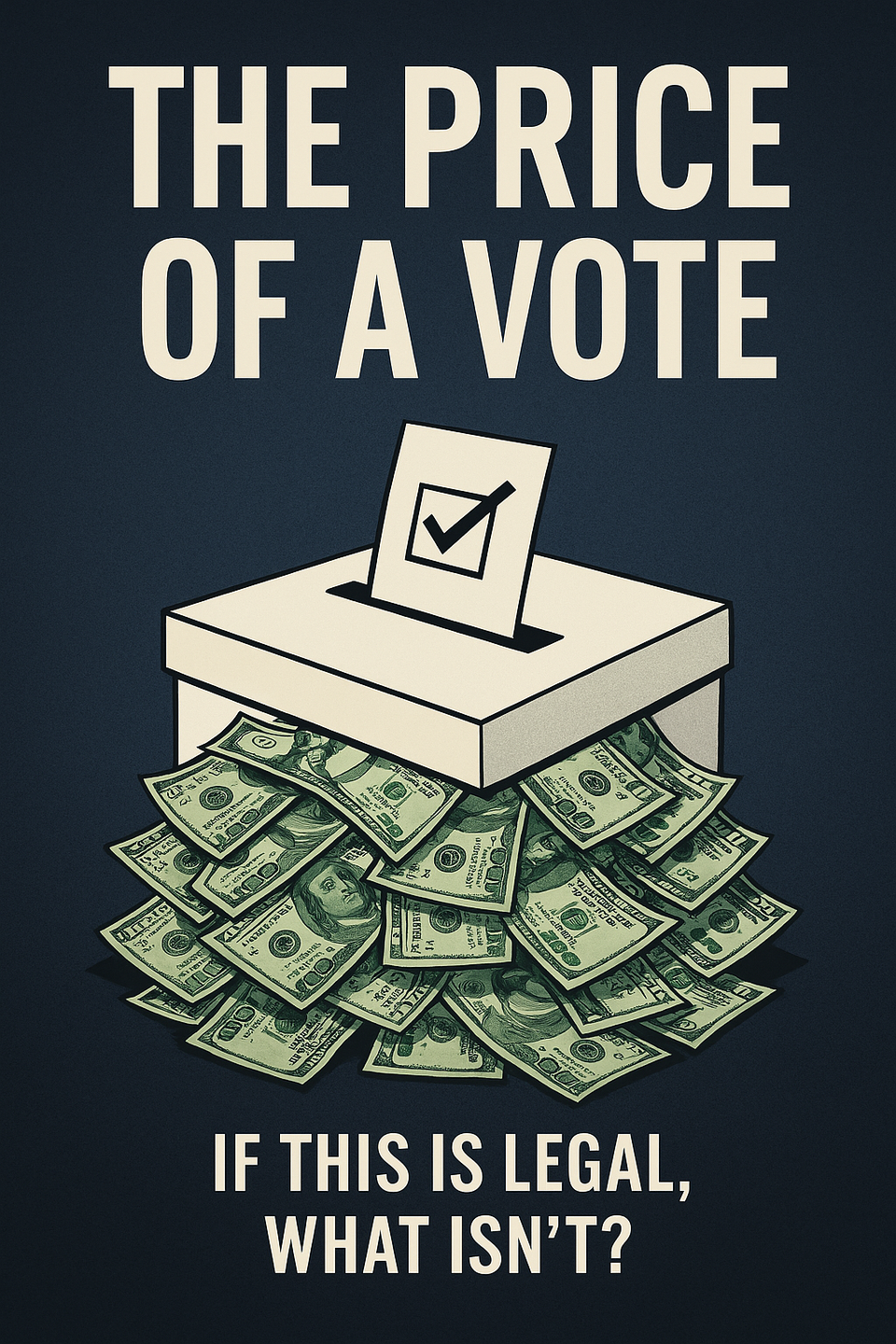
The Price of a Vote
If offering million-dollar giveaways to influence elections isn’t illegal, then democracy may already be for sale.
What Would You Do for a Million Dollars?
What if a billionaire dangled that prize in front of you—not for your vote explicitly, but for your loyalty?
What if that loyalty happened to serve his preferred candidate?
And what if he did it not once, but twice, during a presidential election cycle?
Wouldn’t you expect someone to stop him?
Elon Musk has now offered million-dollar giveaways on multiple occasions—thinly veiled as “free speech contests,” “patriotism rewards,” or “creator incentives”—each time surrounded by pro-Trump messaging and viral influence campaigns.
These stunts aren’t framed as vote-buying. But that’s what makes them effective.
The line is walked so carefully, so cleverly, that no single action triggers prosecution. But step back, and the pattern is unmistakable.
This is not just a threat to campaign integrity. This is a test of whether democracy still has rules—or if billionaires can simply buy their way around them.
What He’s Doing—And Why It Matters
Musk isn’t running for office. But his influence reaches millions—through X (formerly Twitter), Tesla, SpaceX, and a sprawling ecosystem of tech influencers who treat his word like gospel.
In late 2023, Musk used his platform to promote “creator rewards” and “free speech giveaways,” timed precisely with efforts to rehabilitate far-right figures and spread election disinformation.
In early 2025, he did it again—this time with even more explicit political undertones. A new “contest” promised financial rewards for users aligned with “truth and freedom”—buzzwords now indistinguishable from pro-Trump ideology.
What’s being rewarded isn’t creativity. It’s loyalty.
There’s no disclaimer saying, “Don’t let this affect your vote.” There doesn’t need to be.
The psychological framing is enough: align with this ideology, and you might be the next millionaire.
Why This Should Be Illegal
According to 52 U.S. Code § 10307(c), it is illegal to “pay or offer to pay” anything of value in exchange for voting—or not voting—in a federal election.
The Federal Election Campaign Act (FECA) also bars indirect contributions meant to influence the outcome of an election outside regulated campaign finance channels.
Yet Musk continues to offer massive rewards during active election cycles—targeted not at the general public, but at a specific ideological base.
The language may be murky. The intent is clear: use wealth to shape narrative, motivate behavior, and win allegiance.
How Musk Is Getting Away With It
Musk isn’t breaking new ground. He’s exploiting known failures in a broken system:
1. Plausible Deniability
He never says “vote for Trump and win.” Instead, he uses euphemisms: “patriots,” “free speech warriors,” “truth-tellers.” The political alignment is obvious. But the language is vague enough to sidestep enforcement.
2. Third-Party Shields
Musk often promotes these giveaways through influencers or anonymous accounts. When challenged, he claims it wasn’t him—it was “the community,” or “someone on X.”
3. Institutional Paralysis
The FEC is gridlocked, rarely enforcing campaign laws even when violations are clear. And the DOJ, while technically empowered to act, is slow to intervene—especially when the person in question controls military satellites and strategic infrastructure.
4. Influencer Economy Loopholes
Campaign law hasn’t caught up with social media. A giveaway on a livestream, paid in crypto, hosted on a privately-owned platform, doesn’t register as a campaign contribution—but it functions exactly like one.
5. Too Big to Challenge
Musk is not just rich. He’s embedded in military, communication, and space infrastructure. Holding him accountable means taking on someone with leverage over the U.S. government itself.
If This Is Allowed, There Are No Limits
Here’s the heart of it:
If this is allowed—if a billionaire can offer massive giveaways during an election year to people aligned with his ideology—then there is no meaningful limit on what he can buy.
He can buy:
• Loyalty
• Narrative control
• Influence in swing states
• Media coverage
• Silence from regulators
• And eventually, votes themselves
Democracy cannot survive if billionaires are allowed to manipulate public behavior with prize money. This isn’t theory. It’s happening.
This Is a Test—And We’re Failing It
Musk isn’t just testing the law. He’s testing how far public tolerance will go.
So far, no one has stopped him.
If this becomes normalized—if billionaires are allowed to use their platforms and fortunes as shadow campaign tools—then the next election isn’t just compromised.
It’s for sale.
What Must Be Done—Now
This is not a future threat. It is a present one.
Here’s what must happen:
1. The FEC and DOJ must act immediately to clarify and enforce rules on giveaways and politically aligned reward systems.
2. Congress must modernize election law to include influencer-based campaigning, digital giveaways, and platform-driven financial incentives.
3. The public must raise its voice—loudly. We must demand accountability before precedent locks us into a world where elections are just another auction.
Final Words
A vote is not a prize.
A democracy is not a game.
And freedom is not something to be auctioned off to the highest bidder.
If we let Elon Musk buy influence, buy allegiance, and eventually buy votes without consequence, then we are no longer living in a representative democracy.
We are living in a marketplace of manipulation—
where billionaires write the terms, and the rest of us pay the price.
Published by The Round World Society Editorial Board
Next up: the full Swedish translation, adapted for tone, clarity, and cultural context. Ready?