
Elon Musk’s Digital Fiefdom: How Doge, Deregulation, and Democratic Lawsuits Collided
The Battle for America’s Institutions
It started, as most disasters do, with a joke.
Once upon a time, the U.S. Treasury was a stodgy institution, an impenetrable fortress of economic stability, where interest rates were calculated, inflation was monitored, and, crucially, where financial policy was determined by people who had been elected—or at least confirmed by the Senate. But then came Elon Musk, the world’s most eccentric Bond villain cosplaying as a free-speech martyr, who somehow found himself holding the keys to the digital nervous system of the United States government.
And what did he do with it?
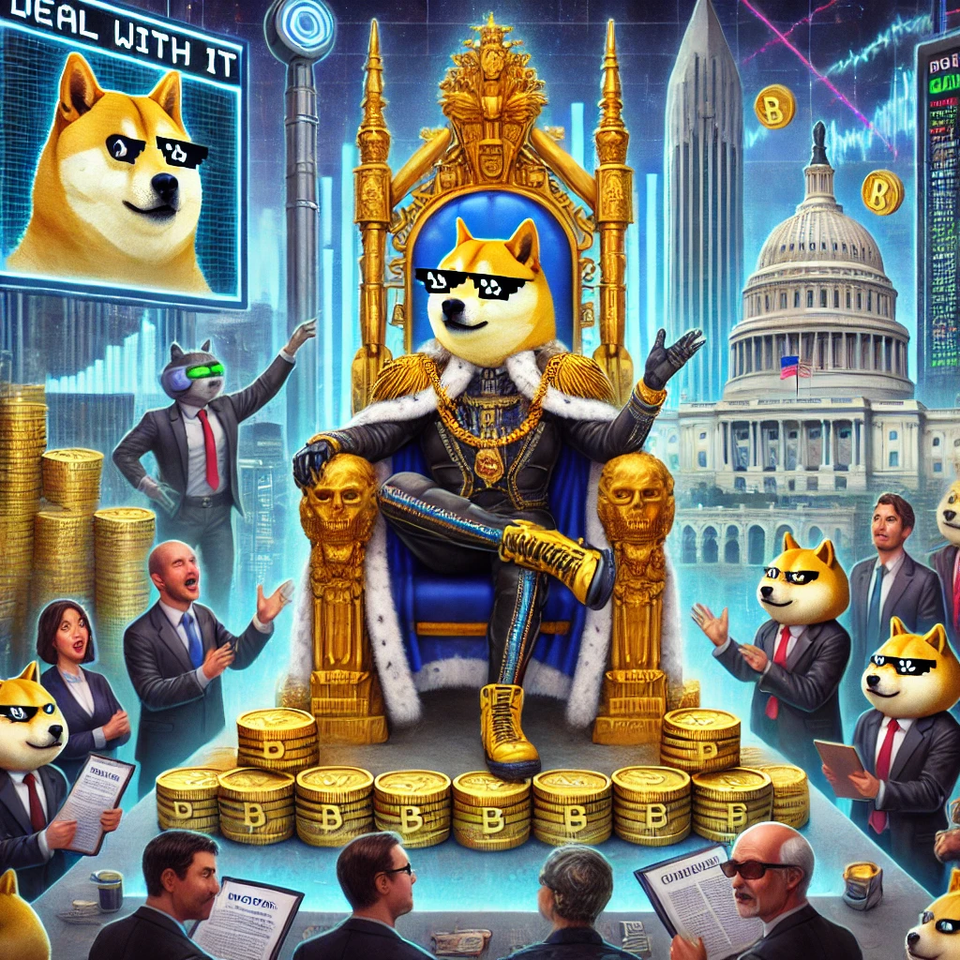
He installed Doge.
Yes, Doge. The meme-coin once worth less than a stick of gum was suddenly a de facto government currency—not because Congress passed a law, not because the Fed agreed, but because one very rich man declared it so, and the people who might have stopped him were too busy debating whether it was unconstitutional to have feelings.
The Rise of the Doge Treasury
The concept was simple in the way that only the deeply unhinged could make it seem logical:
• Musk had already privatized critical U.S. infrastructure. SpaceX controlled military launches, Starlink dictated global communications, and Twitter (or X, or whatever post-apocalyptic name it had that week) had become the direct-line press office for actual authoritarian regimes.
• Then came the Treasury. With the logic of a child who finds out Monopoly money doesn’t buy real houses, Musk announced that the “government should run like a startup” and, naturally, that meant removing all regulation preventing him from issuing currency.
• Enter Dogecoin. Since Musk already had a financial stake in Doge, and because legal tender was apparently just an obstacle to his destiny, he did the only thing that made sense in his reality: he tied government transactions to Doge.
What followed was an economic acid trip of historic proportions.
Dogeconomics 101: How to Break a Nation’s Economy in One Tweet
Imagine, if you will, that the U.S. Government suddenly started paying for military contracts with meme coins. Imagine VA benefits being distributed in digital currency controlled by a single man’s personal whims. Imagine an entire economic system hinging on whether or not Musk was having a good day.
Then reality hit.
• Congress was caught flat-footed. It turns out there are no specific laws preventing billionaires from hijacking the currency distribution process, mostly because nobody thought it would be necessary to write one.
• The Federal Reserve panicked. With the U.S. dollar being actively undercut by a meme, global financial markets began spiraling. Other nations—China, Russia, even France—began warning the U.S. to get its crypto-backed clown show under control.
• And then, the lawsuits came.
Democrats vs. Musk: The Lawsuits That Finally Said “Enough”
It wasn’t Congress that saved America from becoming Doge Nation. It wasn’t the Republican Party, whose members were still trying to determine whether calling something “Doge” was a slur.
No, it was a coalition of Democratic attorneys general, consumer watchdogs, and deeply exhausted bureaucrats who finally yanked the emergency brake.
And here’s what they did:
1. They sued Musk for financial fraud. Turns out, even tech billionaires can’t just create their own shadow currency inside a sovereign nation. Who knew?
2. They blocked Treasury access. Legal injunctions were issued to stop Musk from integrating Doge into government payment systems.
3. They forced the Department of Defense to sever ties. When it became clear that military supply chains were being backed by Doge transactions, the Pentagon finally intervened, and SpaceX was given a brutal legal reckoning.
4. They re-regulated privatized public utilities. Musk’s control of Starlink, payment processing, and critical infrastructure was, at long last, challenged as a national security threat.
The Damage Done: How Close We Came to a Digital Dictatorship
But here’s the real problem: this all took time.
For nine excruciating months, Musk’s personal fiefdom rewired the way the U.S. government functioned. And during that period:
• Billions in government contracts were moved through Doge-based transactions. Some of that money simply…disappeared.
• Federal employees in some sectors were paid in a currency that tanked overnight. Imagine waking up to find out your paycheck was now worth three cents because Musk tweeted “oops.”
• Global trust in the U.S. dollar collapsed. While Congress bickered over how to legislate against meme-coins, China quietly positioned itself as the world’s new financial leader.
• Critical government functions were stalled because Musk didn’t “feel like” approving them. Yes, the Department of Transportation quite literally had to beg for budget approval on X.
The Numbers Speak for Themselves
The lawsuits are still ongoing, but the damage report is staggering:
• $1.3 trillion in economic instability caused by Doge’s integration into government contracts.
• 17 major infrastructure projects delayed due to regulatory confusion.
• 3 major international financial treaties undermined due to U.S. economic instability.
• 1 lunatic billionaire still refusing to answer subpoenas.
And here’s the kicker: this only stopped because someone decided to fight back.
The Final Battle: Democracy vs. The Digital Oligarchs
There’s an uncomfortable truth lurking beneath this absurd tale: it almost worked. If not for the intervention of legal challenges, there is a world in which Musk’s power over the U.S. Treasury would have become permanent.
It’s a stark warning for the future. The next billionaire who decides to seize public institutions won’t be as reckless, won’t be as obviously chaotic. They’ll do it through loopholes, slow regulatory capture, and the slow, creeping apathy of a distracted nation.
Stopping Musk wasn’t just about stopping one man—it was about setting the precedent that no unelected billionaire should control the infrastructure of democracy.
Because next time, it might not be Doge.
Next time, it might be something even worse.